Named 2004 ForeWord Magazine’s Mystery Book of the Year. When a politician dies in 1856 Toronto, and his daughter vanishes, bank cashier Isaac Harris searches for her—from Niagara Falls to Lake Superior.
This mystery novel is set in Canada during an industrial revolution, with little time for scruple or sentiment. The missing woman—Theresa Crane—is married to a steam age railway magnate, whose apparent indifference arouses the amateur detective’s suspicions. Himself a former suitor of Theresa’s, Isaac Harris has reasons of the heart impelling him to solve the mystery.
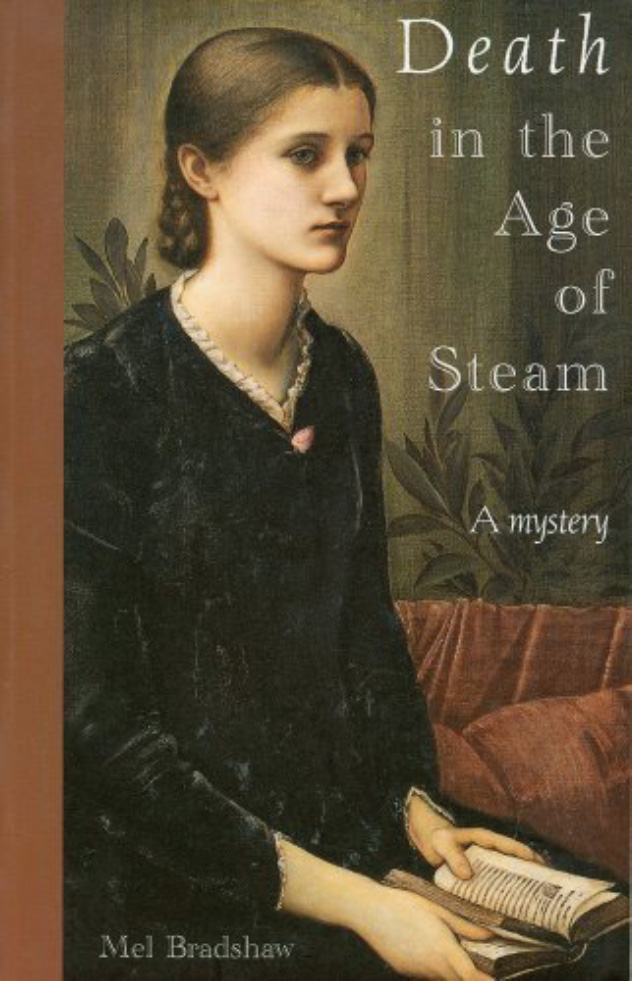
The woman who sat for Sir Edward Burne-Jones was nineteen-year-old Caroline Fitzgerald. Although she never lived in Toronto, her father William J. Fitzgerald was a member of the first class of students at Upper Canada College in 1830. After legal studies at Trinity College, Dublin, William returned to Toronto. At the time of our story (1856), he is believed to have been practising law at 43 King Street W. In the 1860s, he moved to New York City and married Mary A. White. Caroline was born there, the couple’s first child.
The painting is in the collection of the University of Toronto Art Centre.
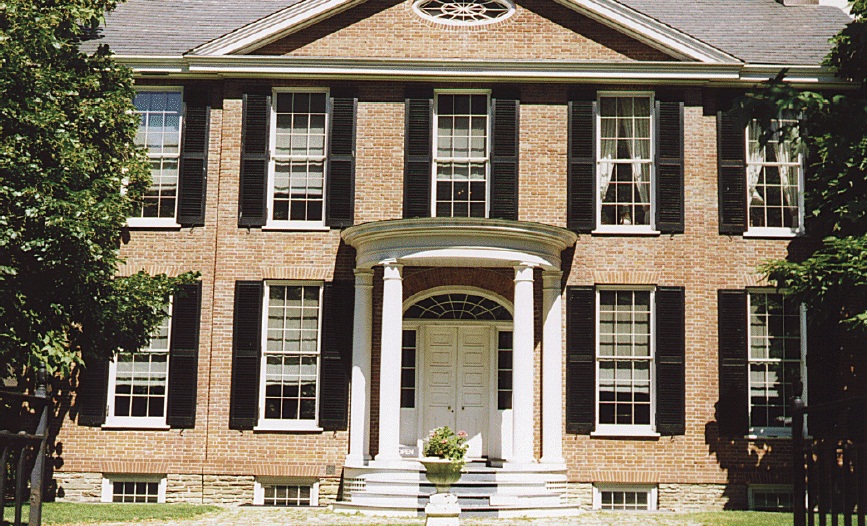
“They loped south to Front Street. Among the brick villas ranged along the north side, Sheridan’s alone showed no flicker of lamp or candle. Its emptiness seemed amplified by the extraordinary amount of glass in its symmetrical façade. Each of the nine sash windows carried eighteen large panes, all dark. Vandervoort turned in at the low gate, crossed the unweeded front garden, and climbed the three steps that led from it to the semicircular porch.”
The death of Sheridan and the disappearance of his married daughter Theresa are the events that set the story of Death in the Age of Steam in motion.
Campbell House was built in 1822 by Upper Canada Chief Justice Sir William Campbell. The extraordinary amount of glass in the façade made the house airy, bright, beautiful — and expensive to heat.